
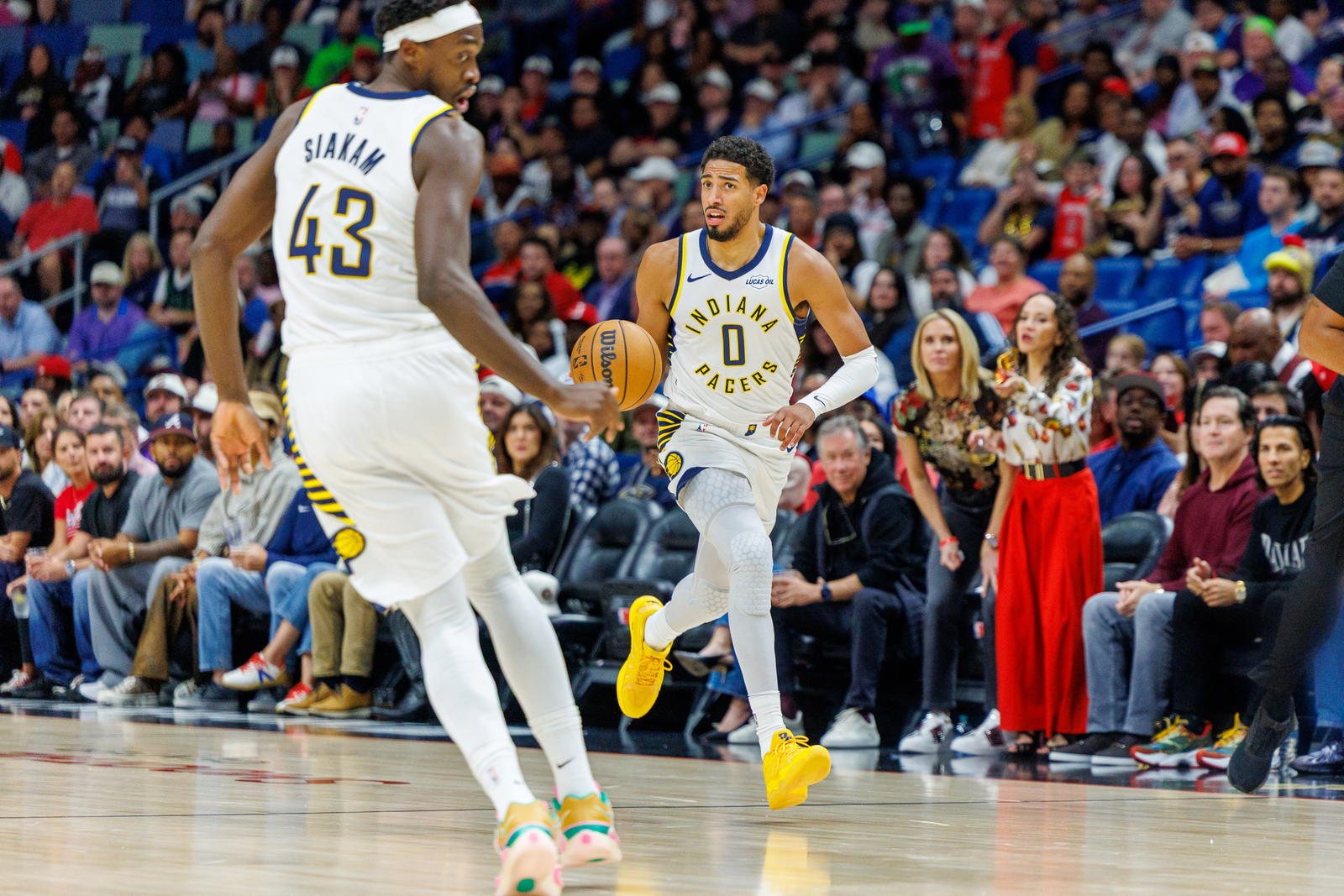
Tyrese Haliburton’s return gave the Pacers their point guard back. Wednesday’s 123-120 win in New Orleans also gave them a closing plan: let Pascal Siakam attack, keep Haliburton involved as a passer, then put the ball in Haliburton’s hands when the defense needs a different problem.
That’s the part I would carry forward from Indiana’s season opener on Oct. 21. The ESPN box score has Siakam at 30 points and Haliburton at 23 points with 12 assists. The sequence behind those totals is more useful than the totals alone. Indiana got consecutive stretches of offense from its two stars without having to choose one permanent closer.
Our look at Haliburton’s Achilles comeback focused on staying available across a season. This was a separate, immediate test: could Indiana trust him to create a basket when a road game was there to be won? He answered that one.
Siakam gave Indiana somewhere to go before Haliburton finished
Start with the game tied at 108. According to ESPN’s play-by-play, Haliburton and Siakam both checked in with 4:14 left. Indiana’s next four baskets all came from Siakam. Haliburton assisted the first and fourth; Andrew Nembhard assisted another. Siakam also made an unassisted pull-up.
That stretch is my strongest reason to keep the closing offense flexible. Giving Siakam the shot did not remove Haliburton from the possession. He could help produce the basket without taking it himself. The Pacers should want that division of work, especially when an opponent is expecting the ball to stay with their point guard.
The shots were varied, too. ESPN logged Siakam’s makes in that stretch as an eight-foot shot, a 14-foot pull-up, a 10-foot floater and a layup. Indiana did not need a three-pointer to keep answering New Orleans. Siakam gave the offense a route to points inside the arc while the game kept changing hands.
Then the job changed. Zion Williamson tied it at 116 with a basket and free throw, per ESPN. Haliburton responded with a driving floater. After Yves Missi tied it again, Haliburton made another driving floater, this time adding the free throw after a foul. Indiana led 121-118 with 1:23 left.
Those are the possessions I wanted to see from him. A comeback can look comfortable when the shots are coming early and there is room to reset. Here, the score demanded an answer, and Haliburton went inside the arc for it. He did not need to hunt a difficult three to make the moment his.
ESPN’s box score lists him at 8-for-15 from the floor and 5-for-5 at the line. Siakam went 13-for-23. Neither needed the other to disappear for his own offense to work. I’d keep giving them that freedom rather than deciding ahead of time whose turn it must be in the last few minutes.
This also gives Nembhard a sensible place in the attack. His nine assists and 18 points, per ESPN, belong in the explanation of the win. His pass to Siakam during that late stretch is a reminder that Indiana can use another creator while its two leading scorers draw attention. The ball can find the player with the opening instead of making every possession a test of star hierarchy.
The last minute still needs work
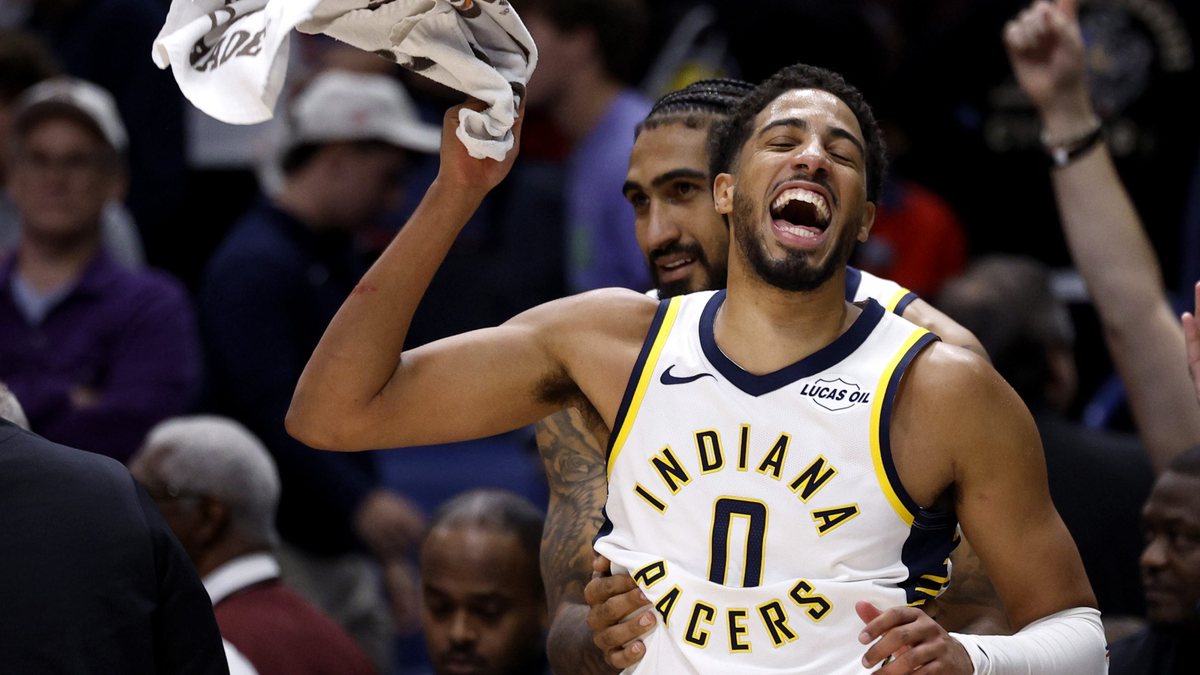
The danger is remembering the shotmaking and forgetting how much work remained after it. Indiana still needed extra possessions and free throws to finish the game. This was a win to build from, with a fairly obvious list of things to fix.
ESPN’s play-by-play shows Siakam missing with 52.1 seconds left and Ivica Zubac collecting the offensive rebound. After Dejounte Murray blocked Zubac’s attempt, Quenton Jackson grabbed another offensive board and drew a foul. Jackson made both free throws with 45.7 seconds remaining to give Indiana its final score.
That sequence deserves space beside the stars’ baskets. A closing offense has to survive a miss. Zubac and Jackson gave Indiana chances to do that, and Jackson converted the opportunity. The Pacers did not have to get a perfect first shot to make the possession count.
But they kept leaving the door open. Nembhard traveled with 14.2 seconds remaining. Zubac lost the ball with 6.4 seconds left and later missed two free throws, according to ESPN. New Orleans had more chances to tie than Indiana should have allowed after Jackson put the Pacers ahead by three.
My takeaway is that the team has a convincing way to generate late baskets and still needs to become cleaner once it has the lead. I would spend the next close-game film session on protecting those possessions, rather than treating a made floater as the end of the assignment.
The broader concern from Indiana’s uneven preseason was whether good stretches would survive the rest of the game. On Wednesday, they did. ESPN’s scoring summary shows Indiana entering the fourth down 92-86 and winning the quarter 37-28. That is a meaningful result, even with the messy finish.
Siakam and Haliburton gave the Pacers a way back and then a way ahead. Keep the ball moving between them, let either finish the possession, and make the opponent defend both. The next step is holding the lead without giving it so many chances to escape.