
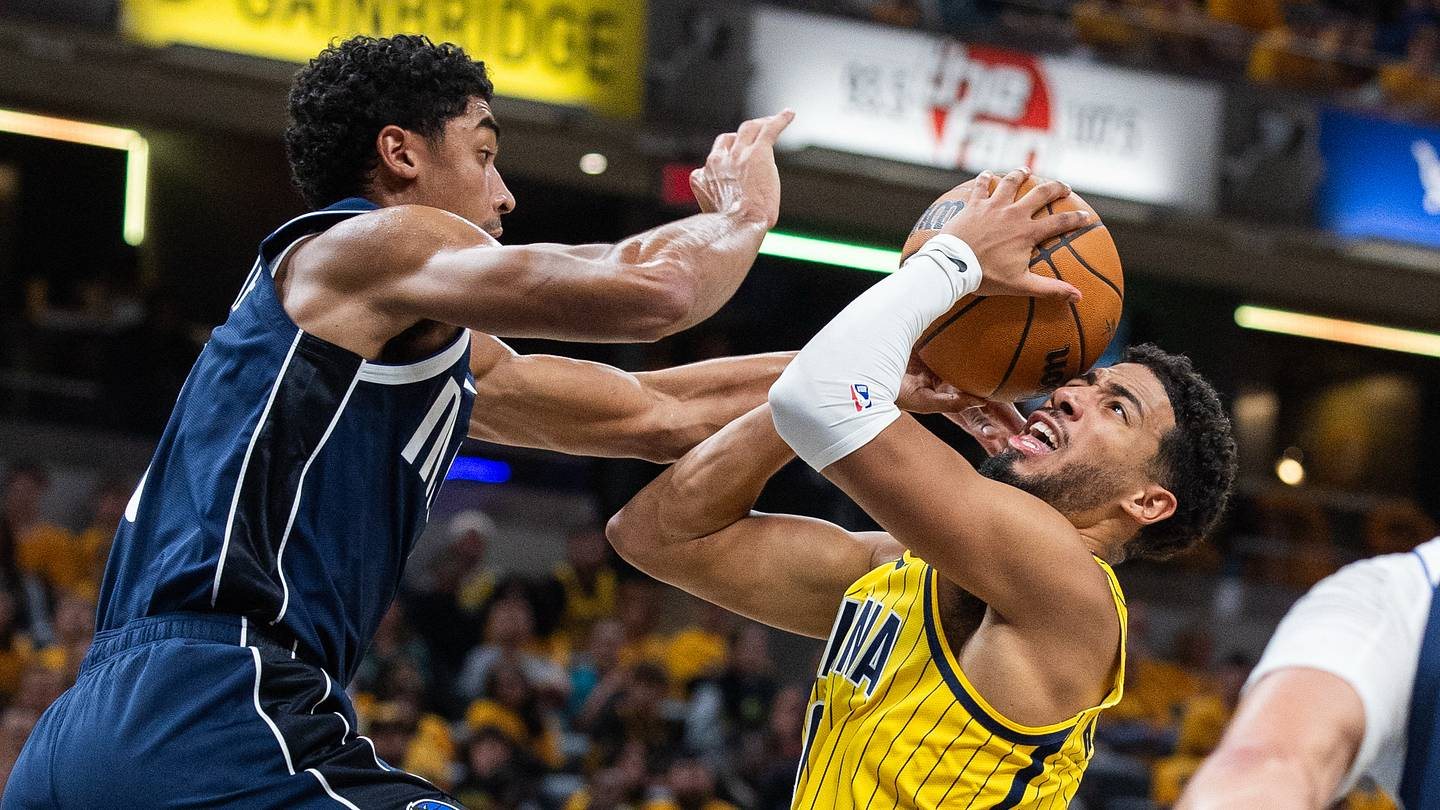
The Aaron Nesmith foul on Cooper Flagg will be the clip people remember from Friday’s Pacers-Mavericks game. Indiana should spend more time on everything that happened before it. Dallas already led 73-40 when the flagrant occurred, according to ESPN’s play-by-play. The home opener had gone badly wrong before the confrontation.
My concern after the 121-105 loss on Oct. 23 is how little resistance Indiana offered while the game was still there to shape. Tyrese Haliburton’s home return was a reason to celebrate. It was never going to excuse a first half that left the Pacers needing an extraordinary comeback just to make the score competitive.
Michael Marot’s Associated Press recap, carried in ESPN’s game report, says Flagg injured his left shoulder on Nesmith’s foul and did not play after halftime. Nesmith was assessed a flagrant, and he and Naji Marshall received technicals after the confrontation. Those are significant events. They do not explain why Dallas was already so far ahead.
For the next game, I want Indiana focused on the possessions that built the deficit. The confrontation deserves attention, but fixing the first half would do more to prevent another loss like this.
Dallas had already taken the game away
ESPN’s scoring summary has Dallas winning the opening quarter 44-27 and the second 33-16. That made the halftime score 77-43. The Pacers lost each quarter by 17, so this was more than one bad stretch that a quick timeout might have erased.
Marot’s recap identifies the runs that broke it open: Dallas used a 22-6 burst to lead 42-23 in the first quarter, then scored 15 consecutive points in the second to move ahead 61-31. Indiana had an entire second quarter to change the direction of the night and instead watched the deficit grow.
The practical lesson is to treat the first failed response as urgent. When an opponent gets away early, the next few possessions need to end with a good shot on offense and a rebound on defense. Chasing the whole deficit at once only makes the task harder. I want the Pacers to value a stable stretch before they start looking for a spectacular one.
This is why Friday belongs beside the win Haliburton and Pascal Siakam finished in New Orleans. That game showed the value of having answers late. Dallas showed the limit of a closing plan when the damage arrives much earlier. A team needs to keep itself close enough for its best late possessions to count.
Indiana played a better second half, with too much ground left to make up. ESPN lists Indiana winning the third quarter 33-21 and the fourth 29-23. Add those quarters and the Pacers outscored Dallas 62-44 after the break. They still lost by 16. Making up ground from that starting point is a different assignment from winning a close game.
I would take the improved half as a standard to demand earlier, without treating it as evidence the first half was harmless. Indiana had already spent its margin for error. Brooklyn on Sunday, the next opponent listed in the AP recap, should be a test of whether the response shows up before the scoreboard demands it.
Haliburton cannot shoot the whole team out of trouble
Haliburton finished with 18 points, seven assists and six rebounds, per ESPN’s final box score. He shot 8-for-17 overall and missed all four of his three-point attempts. There was production in his home return, but there was no outside shooting surge to shrink the gap for everyone else.
The team totals are the sharper explanation. ESPN has Indiana at 7-for-32 from three and Dallas at 14-for-34. Seven additional made threes gave the Mavericks a 21-point advantage from behind the arc. That is a large hole to fill through the rest of the offense, especially while trying to recover from the first half.
Siakam made three of his five three-point attempts, according to ESPN. Subtract his line from the team total and the other Pacers went 4-for-27. That calculation is why I would resist turning Friday into a referendum on Haliburton alone. Indiana’s shooting problem extended well beyond its returning point guard.
It also changes what I’d ask of the next offensive performance. Haliburton making another shot or two would help. The larger demand is for Indiana to keep finding good shots when the first few outside attempts miss. Keep involving Siakam, keep looking for an advantage inside the arc, and avoid allowing the score to choose increasingly difficult attempts for everyone.
Our preseason assessment of Haliburton and the Pacers’ uneven supporting play separated his encouraging return from the team’s other work. Friday deserves the same discipline. Being pleased to have him on the floor does not require being pleased with the basketball around him.
The longer view of Haliburton’s comeback still matters, too. One home loss should not become a demand that he rescue every bad stretch. That would leave Indiana measuring everyone else’s mistakes against whether its point guard can erase them.
I’d rather see a quieter test passed in Brooklyn: finish defensive possessions with rebounds, interrupt an opponent’s run, and enter the second half with a game to win. The Nesmith-Flagg confrontation will draw attention. The Pacers’ next answer needs to arrive much earlier than that.